5 key highlights from Fierce Pharma Week 2026
Diaceutics Team
Fierce Pharma Week 2026 reflected an important shift in pharma commercialization. Pharma has access to more data, technology and channels than ever, but the opportunity lies in using them to make better decisions, act earlier and create more relevant engagement. Here are five key highlights from the week:
1. HCP engagement must be driven by timing and clinical context
A recurring theme at Fierce Pharma Week 2026 was the need to move beyond identifying the right HCP towards understanding when engagement is most relevant. Historical prescribing data remains an important part of HCP targeting, but it primarily provides a retrospective view. It may not reveal who is responsible for an eligible patient’s care today, whether diagnostic activity is shaping the next clinical decision or when an opportunity to engage is emerging.
This shift was also reflected in Doceree’s session, “One Signal, Every Screen: The Rise of Intent-Powered Omnichannel,” which presented an approach for capturing clinical intent signals associated with diagnosing, prescribing and switching at source, then activating those signals across existing channels in the moment rather than weeks later through a static list.
For diagnostic-driven therapies, this distinction is critical. Testing activity, diagnostic results, referrals and care-team dynamics can all influence whether, when or how a patient reaches treatment. Engagement that occurs after those events have passed may miss the point at which relevant information could support the next decision.
This challenge was also explored during the Diaceutics Spotlight Stage session, “Why Traditional HCP Engagement Models Are No Longer Fit for Purpose.”
The session considered how real-time diagnostic intelligence can help identify treating HCPs within 24 hours of a key diagnostic event, enabling more timely and clinically relevant engagement while treatment decisions are still being shaped. The commercial opportunity is not simply to expand reach. It is to understand the clinical context behind an emerging patient need and act while engagement can still make a difference.
Want to engage the right HCP while treatment decisions are still forming?
2. AI must improve commercial decisions, not simply increase output
AI featured prominently throughout Fierce Pharma Week, with discussions covering launch planning, forecasting, analytics, insight generation, content development and omnichannel execution.
The conversation extended beyond what AI can produce to the conditions required for it to deliver meaningful commercial value.
Common barriers included disconnected data environments, poorly defined business problems, limited understanding among business owners and difficulty embedding new tools into established ways of working. These are not simply technical challenges. They determine whether an AI initiative improves a decision or adds another layer of activity.
The potential remains significant. AI can help commercial teams analyze large volumes of structured and unstructured information, identify patterns more quickly and surface insights that may otherwise take considerable time to uncover. It can also support more responsive planning by helping teams understand how markets, audiences and behaviors are changing.
But speed is not a measure of value on its own. Effective applications of AI still require relevant data, clear objectives, appropriate governance and informed human judgement. The real test is whether the technology helps teams make better decisions, act with greater confidence and improve measurable outcomes. More analysis, content or recommendations will not improve commercialization unless they lead to more informed and timely action.
3. Commercial value depends on turning the right signal into action
Pharma organizations have access to more data than ever before. The challenge is identifying which signals matter, understanding what they mean and acting quickly enough to influence what happens next.
Across Fierce Pharma Week, discussions on HCP engagement and analytics highlighted the need to move beyond data accumulation. An insight has limited value if teams have not agreed what it means, which decision it should inform or what action should follow.
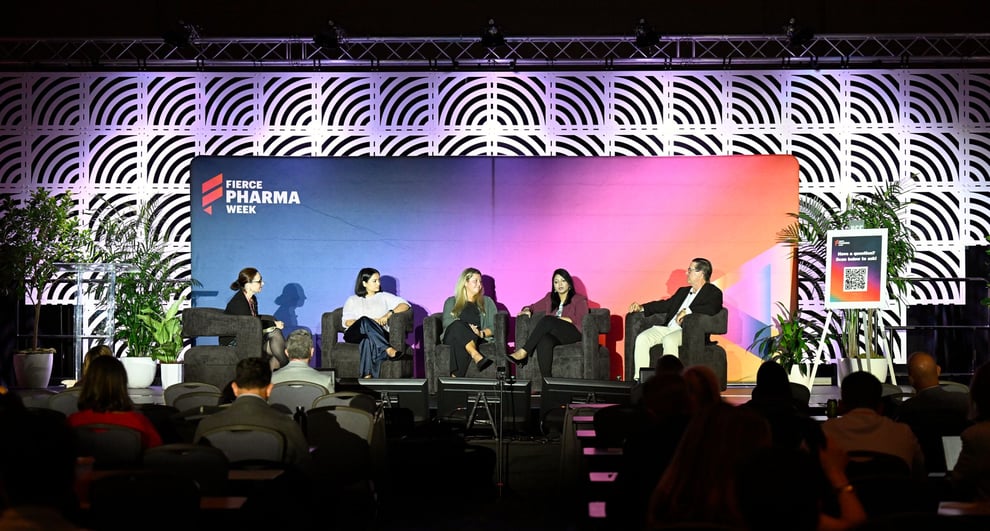
This challenge was explored during the Diaceutics panel, “Drive Omnichannel Decisions With Real-World Diagnostic Data and Intelligence.” The discussion considered how diagnostic and real-world signals can help commercial teams prioritize who to engage, when engagement is most relevant and where limited attention and investment should be focused.
For diagnostic-driven therapies, a diagnostic event can provide clinically relevant context that may not be visible through retrospective data alone. Its commercial value depends on whether teams can interpret the signal, connect it to a clear objective and determine the appropriate response.
Speed is part of that value equation. Organizations may have access to similar information, but their ability to translate insight into timely decisions can differ considerably. If adjusting an audience, message or engagement strategy takes months, the original opportunity may no longer exist.
The priority is not to capture every available data point. It is to recognise the signals that should change the next commercial decision.
4. Omnichannel effectiveness depends on internal orchestration
In omnichannel pharma marketing, adding more channels does not automatically create a coordinated or relevant HCP experience. Omnichannel effectiveness depends on whether an organization can connect customer insight, decision-making and execution across every touchpoint.
That requires more than technology. Marketing, analytics, field teams, agencies, legal, regulatory and compliance must work towards a shared objective, with a consistent understanding of the audience, the customer journey and the action being supported.
This was an important point within the wider omnichannel discussion at Fierce Pharma Week 2026. Customers experience an organisation as a whole, not as a collection of separate functions. When teams are working from different objectives, datasets or interpretations of the journey, that fragmentation is reflected in the external experience.
Strong internal orchestration is therefore fundamental to creating a relevant external experience. Organizations need ways of working that enable teams to interpret signals consistently, agree the appropriate response and learn continuously from the results.
Omnichannel should not be treated as a collection of connected channels or a fixed campaign plan. It must operate as an ongoing cycle of insight, decision, activation and measurement, supported by teams working towards the same outcome.
5. Patient engagement must move beyond awareness towards action
Fierce Pharma Week reinforced that awareness alone is not enough to change what happens across the patient journey.
This was particularly visible in discussions about rapidly growing therapy categories, where high public awareness has created a different challenge for healthcare marketers. The priority is no longer simply ensuring that people have heard of a condition or treatment. It is helping patients understand what the information means, preparing them for informed conversations with HCPs and supporting them before, during and after the clinical encounter.
The GLP-1 patient trends panel illustrated this shift clearly. Speakers discussed the need to move away from traditional product-led promotion and towards more sustained, dialogue-driven support. The focus was not on persuading patients to request a particular brand, but on equipping them to have more productive conversations about conditions, treatment options and longer-term care.
Trust and relevance also featured prominently in the wider patient-engagement conversation. A separate session on patient awareness highlighted the importance of beginning with the emotional and behavioural realities of the patient experience. Clear language, cultural relevance and credible voices can make complex health information more accessible and help communications connect with the people they are intended to support.
This does not reduce the importance of reach. It changes what successful reach should achieve. Awareness creates an opportunity, but value comes from helping patients and HCPs use relevant information to take the next appropriate step.
For commercial teams, this requires a broader view of engagement. Patient communications, HCP engagement and educational activity cannot be planned as entirely separate systems when they ultimately influence the same treatment journey. More connected strategies can align these experiences around the decisions patients and HCPs need to make.
The opportunity is to move from generating awareness towards enabling informed, relevant and measurable action.
Turning insight from Fierce Pharma Week into action
Fierce Pharma Week reinforced that more data, more channels and more activity will not close the gap between scientific innovation and real patient outcomes. For diagnostic-driven therapies, commercialization must work differently. Teams need to see where eligible patients are emerging, identify where decisions are stalling and act while the patient journey can still be influenced.
Diaceutics connects Intelligence and Engagement Solutions, turning diagnostic activity into decision-ready intelligence and coordinated action. This is Precision for All in practice: helping biopharma teams see opportunity earlier, act while decisions are still forming and support more eligible patients to reach the therapies designed for them.
FAQs
What were the key themes at Fierce Pharma Week 2026?
Why does timing matter in HCP engagement?
What did Fierce Pharma Week 2026 reveal about the barriers to AI adoption in pharma marketing?
How can pharma teams turn diagnostic signals into commercial action?
Why must patient engagement move beyond awareness towards action?
Unlock the full potential of your diagnostic-driven therapy and book a meeting with our team today
We’ve been with pharma and biotech companies for over 20 years, helping them to make more informed diagnostic and therapeutic decisions based on real-world data. Our platforms and tools provide global insight from a network of laboratories across 50+ countries.
This unparalleled visibility into real-world testing helps support therapy programs across oncology, cardiology, neurology, autoimmune, rare diseases, and many more.
Written By Diaceutics Team


